What is a Virtual Machine (VM)?
What is VM
A Virtual Machine (VM) is like a computer inside your computer. VM behaves just like a real computer, you can install Windows, Linux, or any operating system inside it. But it's not a physical machine. It's software that acts like a real machine.
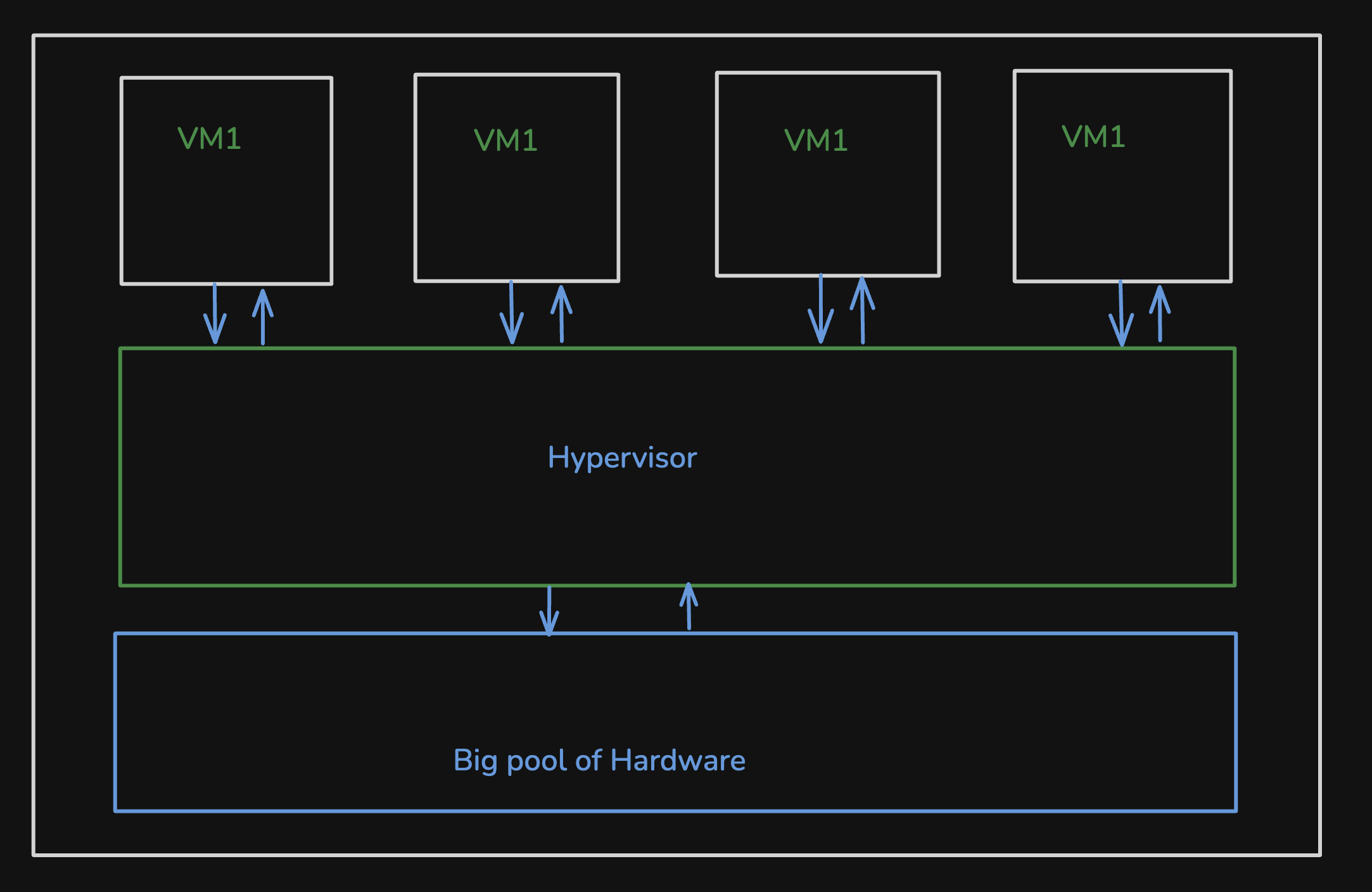
VMs run on a real computer (called the host), and a special program called a hypervisor (like VMware or KVM) helps create and manage these virtual computers.This hypervisor divides the host machine’s resources (CPU, memory, storage) into separate virtual machines.
Each VMs act like independent computer but behind the seen they shares hardware resources and VMs allow us to run different OS and applications in different VMs on the same physical server.
VMs provide on-demand scalability, enabling rapid deployment, adjustment, and termination of instances. Workload consolidation on a single host optimizes hardware utilization.
Scenario Without VMs
Imagine a school where each student needs a full classroom to study.
Every OS Needs Dedicated Hardware.
Expensive Infrastructure.
Complex Maintenance
Difficult Backups & Recovery.
Slower Deployment & Scaling.
Advantages of Virtual Machines (VMs)
Now imagine one big classroom divided into smaller sections and each student gets their own desk, books, and space. That’s more efficient and affordable.
Running Multiple Operating Systems on One Machine.
Server Virtualization & Data Centers.
Disaster Recovery & Easy Backups.
Run apps/websites in the cloud.
Scalability & Instant Provisioning.
What is a Hypervisor? The Silent Force Behind Virtual Machines.
Imagine your computer is a big house, and you want to build small rooms inside it where each room acts like its individual computer.
A hypervisor is special software that helps you run multiple virtual machines on a single physical computer. This software layer placed on a physical computer or server.
A hypervisor (also called a Virtual Machine Monitor, VMM) is software/firmware that creates and manages virtual machines (VMs). It allocates physical resources (CPU, RAM, storage) to VMs and ensures they run isolated from each other.
Key Functions of a Hypervisor
Partitions physical hardware into multiple virtual environments.
Manages resource allocation (CPU, RAM, disk, network).
Ensures isolation between VMs.
Starts, stops, and manages VMs.
Lets you run many OS at once.


